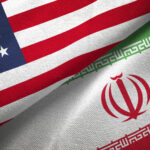
( Investing) – BEIRUT – The U.S.-Iran agreement — the first signed by an American and an Iranian president since Iran’s 1979 Islamic Revolution — is being hailed by its backers as the deal of the century.
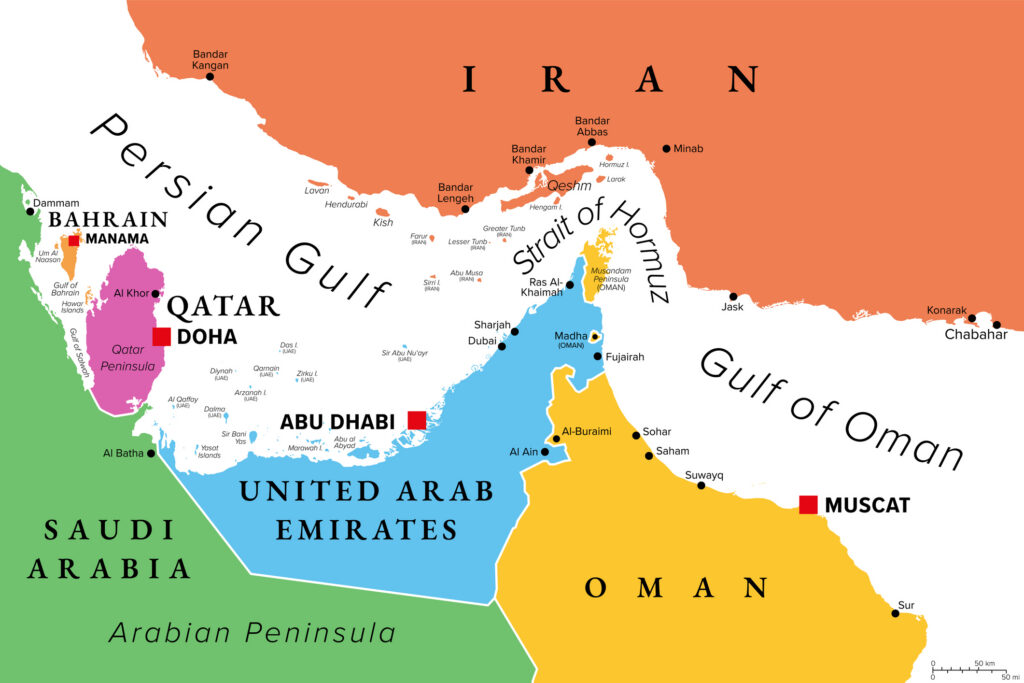
But for Tehran’s adversaries across the Middle East — from Israel to Gulf states and factions in Lebanon — it looks more like the curse of the century: an accord that could leave Iran more secure, more legitimate and ultimately more influential.
U.S. President Donald Trump and Iranian President Masoud Pezeshkian signed the interim deal on Wednesday, ending a three-month war. Trump chose to formalise it at Versailles, on the sidelines of the G7 summit — a setting widely seen as symbolic of the remaking of international order after conflict.
The 14-point agreement extends a ceasefire by 60 days, including in Lebanon, to allow negotiations on a permanent settlement and address issues such as Iran’s nuclear programme.
“For Washington and Tehran, this is a grand bargain — the deal of the century, with no turning back,” said Lebanese commentator Sarkis Naoum. “The probability of success outweighs the risk of failure. Iran cannot endure further economic pain under sanctions, and Trump has no incentive to start a new war.”
DEAL IS A SETBACK FOR ISRAEL
Israeli analyst Danny Citrinowicz described the agreement as a strategic “catastrophe”. What had been framed as a joint U.S.-Israeli campaign to weaken, or even topple the Islamic Republic has, in his view, flipped into American recognition of Iran.
“We went to topple the regime with U.S. backing and ended with Washington effectively giving legitimacy and strengthening the same regime we wanted to bring down,” said Citrinowicz, a senior Iran researcher at Israel’s Institute for National Security Studies.
He says the deal delivers none of Israel’s core demands: no curbs on Iran’s missile programme or proxies and no clear path to dismantling its nuclear facilities. Even Israel’s campaign in Lebanon has been constrained by the ceasefire framework imposed at Iran’s insistence.
The fallout is both political and strategic. The deal undercuts Netanyahu’s narrative on Iran and exposes the limits of his leverage with a U.S. president seen as closely aligned with Israel.
Citrinowicz says Iran has gained room to manoeuvre and the deal risks entrenching its position while deepening Israel’s isolation. “Everything is bad,” he said bluntly. “And it’s only going to get worse.”
If the agreement holds, Iran appears to secure the stronger outcome: an end to the war, phased sanctions relief, renewed oil exports and the prospect of vast reconstruction funds — alongside implicit acceptance of its political system.
Washington, by contrast, falls short of goals it shared with Israel: toppling the clerical establishment, dismantling Iran’s nuclear programme and curbing its regional reach. Rather than reshaping Iran’s position, the deal restores it.
The U.S. and Israel launched the war on Iran on February 28, assassinating the 86-year-old Supreme Leader Ayatollah Ali Khamenei and other senior figures in the first days. The conflict spiralled, killing more than 7,000 people, mostly in Iran and Lebanon, while driving up energy prices and raising fears of a food crisis in developing states.
IRAN GAINS UPPER HAND IN LEBANON
For Lebanon, the agreement tilts the balance toward Iran, reinforcing the role of Tehran-backed Hezbollah and folding the country into a broader U.S.-Iran framework while sidelining Beirut-Israel talks.
It binds Lebanon into the 60-day ceasefire, committing all sides to halt operations across all fronts.
Lebanese President Joseph Aoun warned last week that Iran cannot negotiate on Lebanon’s behalf on issues such as the ceasefire and Israeli withdrawal from southern territory.
But sources close to Hezbollah argue the opposite: that the U.S.-Iran track strengthens Lebanon’s position by elevating it into a higher-level negotiation. In their view, Tehran and Washington can pressure their respective allies — Hezbollah and Israel — to deliver a settlement.
Alarm is sharpest in the Gulf, where Iranian attacks have shaken confidence in long-standing security arrangements. Gulf states have emerged as the war’s main losers — spectators to decisions that reshaped their security landscape and now left to absorb the fallout.
Gulf sources say the deal is already reshaping strategic thinking: eroding confidence in U.S. protection, entrenching Iran as an enduring regional force and accelerating a shift toward accommodation rather than confrontation.
Iran expert Alex Vatanka, however, pushes back against that anxiety. Rather than capitulation, he sees the agreement as the least bad outcome after years of failed coercion.
“They tried to take Iran down militarily. They couldn’t. The alternative would have been catastrophic — a wider war could have devastated the Gulf for decades,” said Vatanka, a senior fellow at the Middle East Institute in Washington.
The real test lies ahead — in implementation of the deal, in the unresolved nuclear negotiations, and in the regional reactions it will provoke, he said: “It’s big, but it’s not the end of it. It’s just the beginning.”
ISRAEL CAN BE A SPOILER
Some analysts see Israel as the main wild card. While unlikely to derail a process owned by Trump, they warn the risk remains — particularly in Lebanon.
“Israel has been isolated, after this war, both in the region and in the world,” said one Iranian official, who declined to be named.
“Iran got what it wanted…We did not abandon our friends, such as Hezbollah, rather, we were even prepared to go to the extent of walking away from the table and returning to war because of them,” added another.