North America accounts for 54% of job postings
Now that the price of oil has recovered from the bankruptcy-threatening bottoms of early 2016, the oil and gas industry has begun hiring again.
British global talent firm NES recently conducted a survey of companies and individuals in the oil and gas industry, examining hiring sentiment in the current job market.
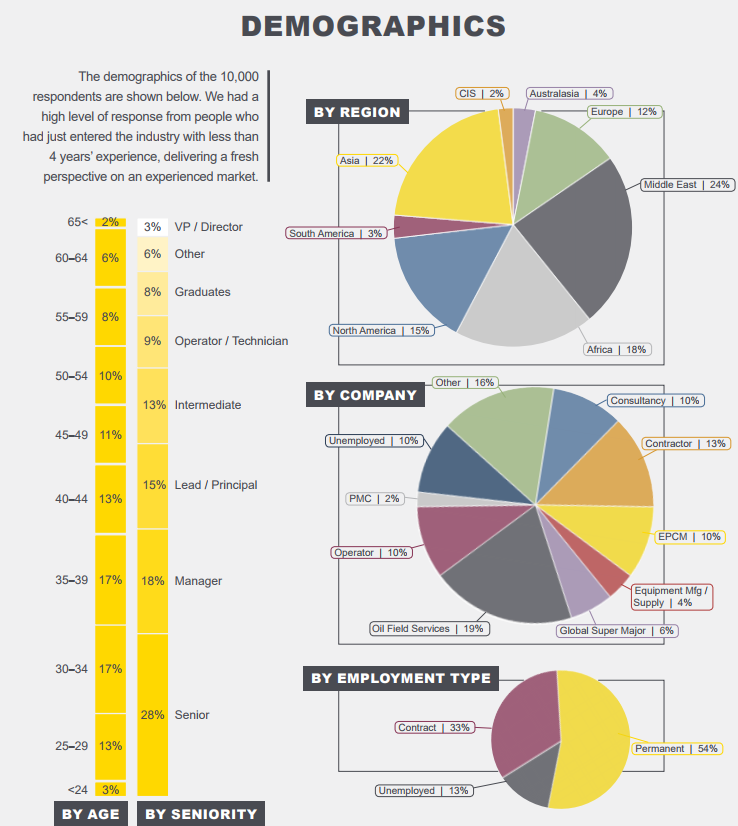
NES reports that there were about 10,000 survey participants, ranging across over 20 disciplines and 158 countries. Overall, NES has found a relatively large amount of positivity in the industry, at least when compared to 2014-2016 levels. In reporting its results, NES found:
- 89% of employers expect staffing levels to stay the same or increase in the next 12 months, and
- Only 18% have negative confidence in the current employment market.
There has been a 2% year-over-year increase in oil and gas job postings online, with jobs from corporations up by 8%. Unsurprisingly, Halliburton (ticker: HAL) is advertising the largest number of available jobs, followed by Amec Foster Wheeler (ticker: WG.L), Baker Hughes (ticker: BHGE), CB & I (ticker: CBI), and Chevron (ticker: CVX).
Most of these jobs are located in North America, as the region accounts for 54% of job postings. Europe is responsible for 21%, while the remaining 25% is split between the rest of the world.
This survey includes more than simply E&P and service companies, with consultants, contractors, EPCMs, PMCs and equipment suppliers also included.
North American jobs pay best
The best starting salaries are found in independent E&P companies, where graduates receive an average of $58,800 salaries. As experience increases, however, the balance shifts between independents and supermajors. According to NES, the average intermediate, senior-level and VP-level employee in a supermajor receives the highest salary, but managers receive the highest pay in independents.
North America is the best place to work in terms of salary, with almost every discipline receiving the highest pay in the U.S. and Canada.
Most employees of the oil and gas industry receive benefits, but the type of benefits varies widely. Every company type commonly pays out bonuses, with operators being the most likely to distribute such benefits. Other types of benefits are more specialized. Private military companies (PMCs) reported especially high rates of hazard pay, training and pensions, as might be expected considering the nature of the job.

The recent change in the oil and gas industry has been mirrored in the workforce. According to NES, about 45% of all respondents have changed jobs in the past 2 years, and only 10% have remained with their employer for the past 11 years.
Layoffs during the downturn mean skills are scarce now
NES also asked employers what each one believes is the most significant issue facing the industry in the next 12 months. As might be expected, economic instability ranks highest, as 49% of employees believe this will be the largest concern. In second place is the problem of skills shortages, which is particularly prevalent in North America.
The oil price downturn led many companies to slash headcounts, and operations often laid off the oldest, most highly paid workers. However, this also means companies were laying off their most experienced employees. 43% of employees believe the skills shortage is specifically due to inadequate planning for succession, with a lack of knowledge transfer and skills reduction. Companies are trying to mitigate this problem, with over half of all respondents looking to training and development to give existing employees new skills.