Revisions can substantially change overall picture
Global inventories of crude oil are much in the news currently, and reducing them is the main goal of OPEC’s cut agreements. However, according to the Federal Reserve Bank of Dallas, all is not right with the numbers. According to the Texas-based number crunchers, global inventory data may not be as accurate as assumed.
Traders in the U.S. are spoiled by the EIA’s inventory processes. The agency provides a consistent, reliable measure of nationwide oil inventories every week, a service unmatched elsewhere. Most other countries are significantly less transparent and/or publish data much less often. Many non-OECD countries, including China, members of OPEC and many emerging economies don’t provide such information at all. These countries are the heart of global energy demand growth, so they are often the most important inventories to watch, but they cannot be observed.
Revisions to inventory estimates – up to 12 months later – may get closer to the real story
Instead of actual hard inventory data, estimates of oil production and consumption are often used, with the implied surplus or deficit translating to a change in global inventories. The EIA and IEA each publish estimates of past and future inventory changes, in an attempt to show where global inventories are now and how they may change in the future. However, these estimates are often revised, sometimes significantly so. The EIA, for example, often reports substantial differences between its weekly and monthly production data. Consumption data is also often unreliable, and is frequently revised by subsequent reports.
Revisions typically occur up to 12 months after the initial data is published.
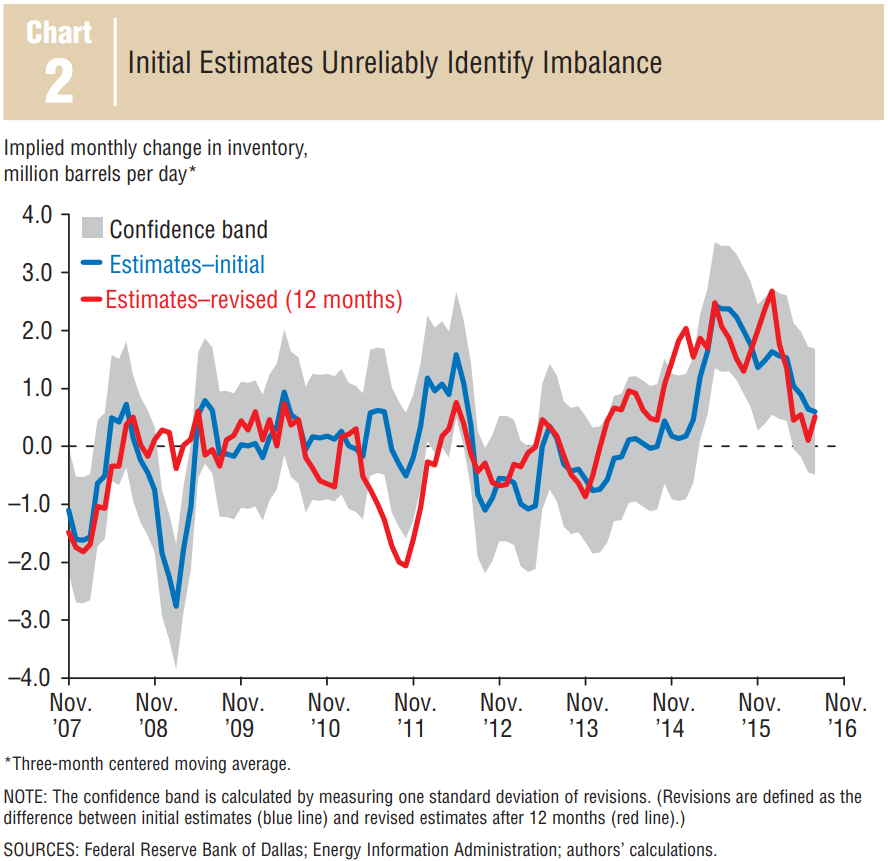
The Dallas Fed tracked these revisions over the past 10 years, and compared the initial estimates to the revised estimates after 12 months. This analysis showed revised numbers generally confirmed original estimates, but had several major exceptions.
Large inaccuracies in 2009, 2011, 2014
Initial data in early 2009 suggested a sizeable decline in global petroleum inventories, but revised estimates showed that the stock levels were essentially flat. Initial estimates in 2011 implied relatively flat inventories, but revisions showed significant draws occurring. The inventory builds during the beginning of the oil price crash, in late 2014, were much larger than initially estimated.

These inaccuracies have some important implications, especially for OPEC. The potential for revisions means current data for global demand and consumption, and therefore implied inventory changes, must be viewed with suspicion. There needs to be a significant imbalance to confidently state the market is in surplus or deficit.
As OPEC meets in eight days to determine the fate of cartel production cuts through 2018, it will need to examine global inventories with a wary eye, and not assume the most recent data is carved in stone. If they listen to the Dallas Fed.