425 MBOEPD shut in
The Bureau of Safety and Environmental Enforcement (BSEE) has released today’s Tropical Storm Harvey Activity Statistics, outlining the effects of the storm on activities in the Gulf.
According to the BSEE:
- 102 production platforms have been evacuated, just under 14% of the 737 manned platforms in the GOM.
- These shutdowns mean about 324 MBOPD, or 18.5% of the current oil production in the GOM, has been shut in.
- In addition, 611 MMcf/d, or just under 19% of all gas production is offline.
BSEE said that its numbers are based on daily reports submitted to the BSEE by offshore operators.
Personnel are still evacuated from five non-dynamically positioned rigs, half of the total number of such rigs in the Gulf. Non-dynamically positioned rigs include jackup rigs, platform rigs, all submersibles and moored semisubmersibles. No dynamically positioned rigs have been moved off location, so all 21 remain in place, according to BSEE’s latest offshore update.
As part of the evacuation process, personnel activate the applicable shut-in procedure, which can frequently be accomplished from a remote location. This involves:
- Closing the sub-surface safety valves located below the surface of the ocean floor to prevent the release of oil or gas. During previous hurricane seasons, the shut-in valves functioned 100 percent of the time, efficiently shutting in production from wells on the Outer Continental Shelf and protecting the marine and coastal environments.
- After the storm has passed, facilities will be inspected.
- Once all standard checks have been completed, production from undamaged facilities will be brought back on line immediately. Facilities sustaining damage may take longer to bring back on line.
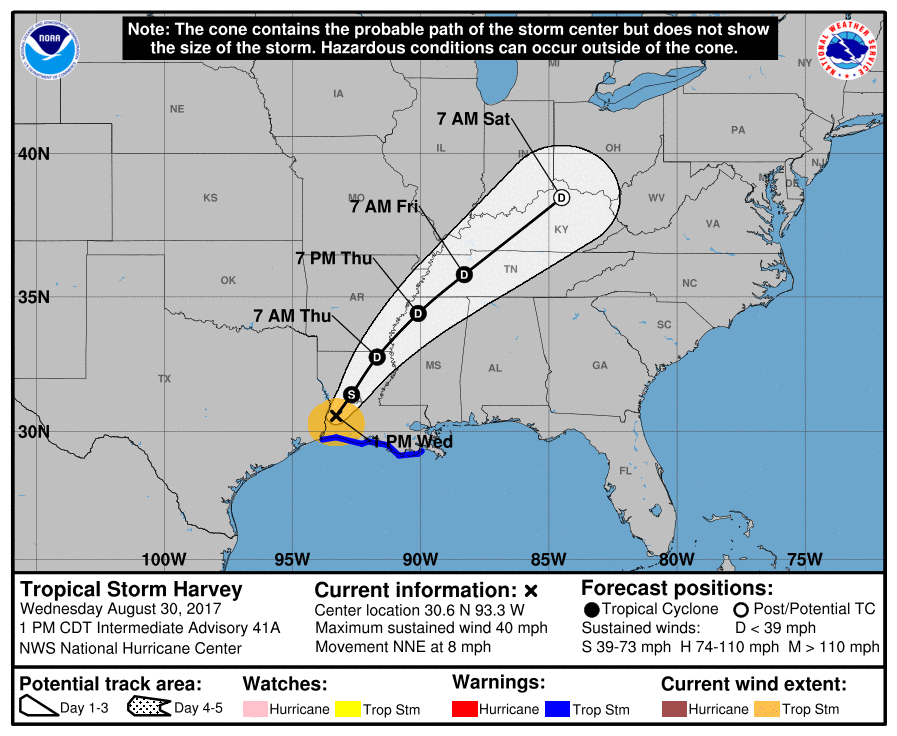
Tropical Storm Harvey is currently predicted to move northeast, dissipating gradually as it passes over Louisiana, Mississippi and Tennessee.