(By Oil & Gas 360) Part II of II– If the first part of the story is about geology and production, the second is about capital, and who controls the resource.

Because the biggest structural difference between the Permian and the Montney is ownership.
In the Permian, subsurface rights are largely privately held. That has created one of the most dynamic capital environments in the world. Assets move quickly, capital scales rapidly, and investors have multiple entry points, from public equities to royalties to direct working interest.
The Permian is built for capital velocity.
The Montney operates mostly under Crown ownership, where subsurface rights are leased rather than owned. That creates a more structured system, slower to develop, but more aligned with long-term planning.
At first glance, that looks like a constraint; in reality, it’s becoming an advantage.
Because Crown ownership forces alignment between upstream development, infrastructure buildout, and export strategy. It discourages short-term flipping and encourages long-duration capital deployment.
That model is now being validated in a way that markets can’t ignore.
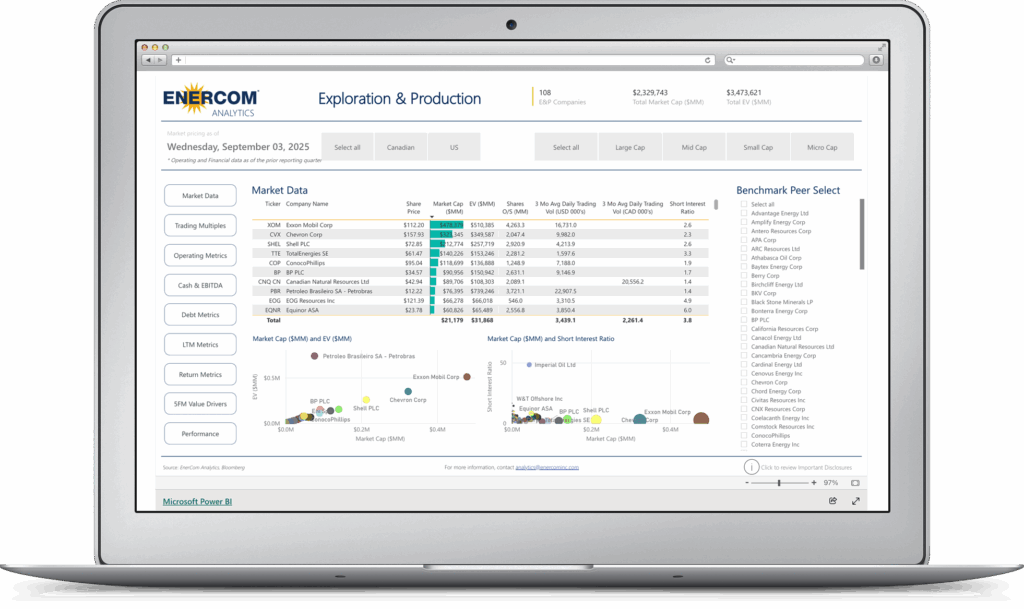
In recent headlines, Shell agreed to buy Canada’s ARC Resources in an output-boosting $16.4 billion deal, signaling something much bigger than a single transaction.
They signal a shift in where global capital sees long-term value. Shell is not buying into the Montney for short-cycle gains.
It is positioning for long-duration gas supply tied directly to LNG.
ARC Resources is one of the largest Montney producers, with a deep inventory of high-quality drilling locations and direct exposure to Canada’s emerging LNG export capacity.
By acquiring ARC, Shell is effectively integrating upstream supply with downstream LNG infrastructure, a full value chain strategy.
This is fundamentally different from how capital typically enters the Permian.
In the Permian, capital is optimized for flexibility and speed. It responds to price signals, scales quickly, and prioritizes near-term returns.
In the Montney, capital is increasingly optimized for stability and duration. It aligns with infrastructure, long-term contracts, and global gas demand.
That’s why the two basins are not competing for the same capital, they are attracting different capital.
The Permian still dominates in terms of immediate impact. It offers liquidity, scale, and responsiveness. But it is also further along in its lifecycle, with fewer opportunities for outsized returns without moving into less productive acreage.
The Montney is earlier in its investment cycle. It lacks the immediacy of the Permian, but it offers something increasingly valuable: long-term, scalable supply tied to LNG markets.
The ownership structure reinforces that difference, private ownership in the Permian accelerates development and capital turnover.
Crown ownership in the Montney slows the process, but creates a more coordinated, infrastructure-driven growth model.
Both systems work; but they produce very different outcomes.
The Permian maximizes speed, the Montney maximizes staying power.
The significance of the Shell–ARC deal, and the broader shift it represents; is not just about Canada.
It’s about where the next decade of energy capital is going.
For years, oil dominated capital allocation because it offered scale, liquidity, and immediate returns. The Permian was the clearest expression of that model.
Now, natural gas, specifically LNG-linked gas, is emerging as a parallel investment thesis.
Not because it replaces oil, but because it solves a different problem: long-term energy security.
The Permian will continue to matter for decades. It will remain the fastest-moving, most responsive oil basin in the world.
But it is maturing and the Montney is still building.
And with global LNG demand rising, infrastructure expanding, and major players like Shell committing billions to secure supply, the Montney is transitioning from a regional gas play into a global strategic asset.
That shift is significant because it marks a change in how capital views energy.
From short-cycle responsiveness to long-cycle reliability.
The Permian provides the speed, the Montney provides the durability.
And increasingly, the companies, and investors that understand how to balance both, are the ones shaping the future of global energy supply.
About Oil & Gas 360
Oil & Gas 360 is an energy-focused news and market intelligence platform delivering analysis, industry developments, and capital markets coverage across the global oil and gas sector. The publication provides timely insight for executives, investors, and energy professionals.
Disclaimer
This opinion article is provided for informational purposes only and does not constitute investment, legal, or financial advice. The views expressed are based on publicly available information and market conditions at the time of publication and are subject to change without notice.