Total rig count down by one
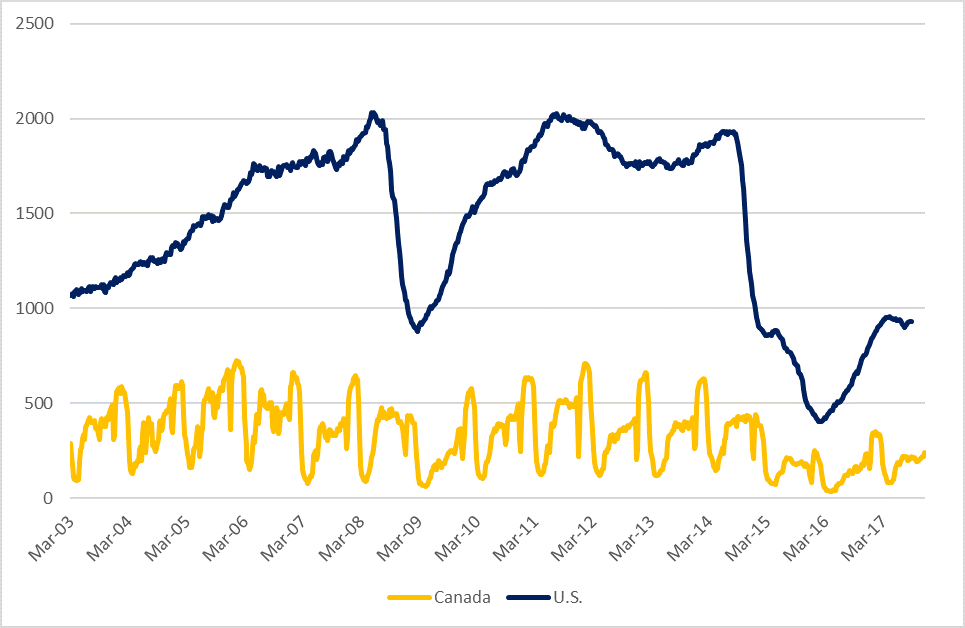
U.S. drilling activity decreased slightly this week, according to the latest edition of Baker Hughes Rig Count.
One rig came offline in the week, bringing the total number of rigs active in the country down to 930. This rig was an offshore platform, meaning there are now 19 offshore rigs, 909 land rigs and two inland waters rigs active in the country.
Activity shifted to gas targets this week, as three gas rigs began drilling while four oil rigs shut down. Oil targets still dominate, though, making up 80.3% of all activity.
Changes favored horizontal activity, five such rigs began operations in the week. Conventional activity declined, with two directional and four vertical rigs shutting down. Horizontal drilling now accounts for 86.1% of all drilling in the U.S., the highest proportion ever.
Pennsylvania saw the largest increase in activity this week, gaining three rigs. One rig also became active in North Dakota and Wyoming. One rig shut down in Louisiana and Missouri, and two came offline in Texas and New Mexico.
Marcellus pulls ahead 48 to 47
All three new rigs in Pennsylvania are targeting the Marcellus, which saw three new rigs this week. The Granite Wash also added two, and one rig came online in the Haynesville and Williston. The most popular basins saw the largest decreases this week, as three rigs shut down in the Permian and four came offline in the Cana Woodford. There are now 397 rigs in the Permian and 69 in the Cana Woodford.
The Haynesville and Marcellus continue to struggle for supremacy, as the two basins have had exceedingly close activity levels since September. The Marcellus pulled ahead again this week, and now outnumbers the Haynesville by a single rig.
Canada
Activity in Canada increased sharply, rising by 19 rigs to a total of 238. Unlike in the U.S., new Canadian activity exclusively targeted oil this week, with 22 oil rigs coming online and three gas rigs shutting down. Most new rigs came online in Saskatchewan, where fifteen became active.
Seven more started operations in Alberta, while three came offline in British Columbia. Canadian activity is much more volatile than U.S. operations, and large numbers of rigs regularly become active or shut down.