(By Oil & Gas 360) – Global oil markets are being reshaped in real time as geopolitical disruptions and shifting sanctions policies force buyers and producers to rethink long-established trade patterns.

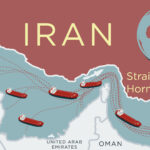
A recent U.S. waiver allowing limited purchases of Russian crude has helped keep some barrels moving into the global system, particularly into Asia. The move was designed as a short-term measure to ease supply pressure as conflict in the Middle East disrupts traditional flows through the Strait of Hormuz.
But while Russian oil is finding renewed demand, interest in Iranian crude remains muted. Ongoing sanctions, payment complexities, and uncertainty around long-term policy direction continue to limit broader market participation, even as some restrictions are eased.
At the same time, supply constraints are emerging elsewhere. Disruptions to Russian export infrastructure, driven by attacks, logistics issues, and sanctions pressure, have sidelined a significant portion of the country’s export capacity, tightening availability in key markets. With fewer barrels reaching the market, buyers are increasingly competing for alternative supply.
That shift is already visible in Asia.
India, one of the world’s largest energy importers, has resumed purchases of Iranian liquefied petroleum gas for the first time in years after U.S. policy adjustments opened a narrow window for trade.
At the same time, India’s Cairn has reduced oil output by roughly 10% due to shipping complications tied to the Middle East crisis, underscoring how logistical disruptions are now directly impacting production.
Meanwhile, supply challenges are not limited to geopolitics alone. In Iraq, oil output has declined further as storage capacity fills, forcing producers to slow production despite strong global demand.
The bottleneck highlights how infrastructure constraints can amplify supply pressures even in countries capable of producing more.
Taken together, these developments point to a market that is becoming more fragmented and less predictable.
Rather than a single dominant supply source, global oil flows are increasingly being redistributed across a patchwork of political decisions, logistical constraints, and shifting alliances. Russian crude is re-entering markets under temporary policy relief, Iranian volumes remain constrained, and other producers are facing operational limits of their own.
For traders and investors, the key takeaway is that supply is no longer just about production, it is about access.
In a market shaped as much by geopolitics as by fundamentals, the ability to move barrels may matter more than the ability to produce them.
About Oil & Gas 360
Oil & Gas 360 is an energy-focused news and market intelligence platform delivering analysis, industry developments, and capital markets coverage across the global oil and gas sector. The publication provides timely insight for executives, investors, and energy professionals.
Disclaimer
This opinion article is provided for informational purposes only and does not constitute investment, legal, or financial advice. The views expressed are based on publicly available information and market conditions at the time of publication and are subject to change without notice.