(Oil & Gas 360) By Greg Barnett, MBA – Thailand’s recent decision to explore crude supply options with Oman reflects not a collapse in access to Iranian oil, but a deeper vulnerability to the geopolitical architecture surrounding it. Thailand does not meaningfully import Iranian crude.

However, the U.S.–Iran war, combined with Washington’s tightened maritime blockade and secondary sanctions, has exposed how profoundly Thailand’s GDP depends on Middle Eastern oil flows, even when Iranian barrels are absent.
According to Thailand’s Ministry of Energy, the country imports roughly 85–90 percent of its crude oil consumption, with total net energy imports equivalent to around 5–6 percent of GDP, the deepest negative energy trade balance in emerging Asia. “Thailand does not import oil from Iran,” Deputy Energy Permanent Secretary Veerapat Kiatfuengfoo said in March, “but we are still exposed to the global price and shipping impact of the conflict”.
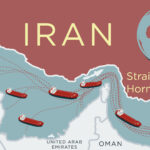
That exposure became acute when traffic through the Strait of Hormuz collapsed by more than 90 percent following Iranian attacks and the subsequent U.S. naval blockade in March and April 2026. The strait ordinarily carries about one‑fifth of global oil and LNG flows, and roughly half of Thailand’s crude imports transit the route. Brent prices briefly surged above $120 per barrel, pushing up Thailand’s import bill almost overnight.
The macroeconomic consequences have been swift. Thailand’s National Economic and Social Development Council warned on March 10 that prolonged disruption could cut 2026 GDP growth to 1.3 percent, down from earlier forecasts near 2 percent. “Thailand, which depends heavily on imported oil, would be hit hard by rising energy prices if the conflict deepens,” said NESDC Secretary‑General Danucha Pichayanan. Diesel price caps have so far masked the shock, but at mounting fiscal cost, with the Oil Fuel Fund slipping billions of baht into deficit.
Thailand’s turn toward Oman and other Gulf producers must also be understood politically. U.S. secondary sanctions make any Iranian energy engagement commercially toxic for Thai firms, while the U.S. blockade, though aimed at Tehran, has restricted shipping insurance availability and raised freight costs for neutral countries. As one Thai government briefing put it, “The strategic risk is not shortage. It is repricing”.
This has strained Thailand’s already delicate relationship with Washington. Although a long‑standing U.S. treaty ally, Bangkok has grown wary of bearing the economic fallout of U.S. Middle East strategy without input into its execution. Analysts at the Council on Foreign Relations note that U.S. sanctions and unilateral pressure campaigns have, over the past decade, “accelerated Thailand’s drift toward hedging behavior and diversified alignment”.
How the United States manages this conflict after the shooting stops may matter even more than during wartime. A prolonged or ambiguously enforced blockade risks permanently embedding higher energy prices, freight premiums, and currency pressure across Asia’s import‑dependent economies. By contrast, a credible post‑war framework that restores predictable passage through Hormuz would disproportionately benefit U.S. partners like Thailand.
For Bangkok, the lesson is clear. Thailand’s vulnerability is not to Iranian oil itself, but to the geopolitical systems that govern its movement and price. For Washington, the warning is broader: alliances in Asia are not tested only by military commitments, but by whether U.S. strategy internalizes the economic costs imposed on those who remain formally on its side.
By oilandgas360.com contributor Greg Barnett, MBA.
The views expressed in this article are solely those of the author and do not necessarily reflect the opinions of Oil & Gas 360. Please consult with a professional before making any decisions based on the information provided here. Please conduct your own research before making any investment decisions.