No other region combines scale, cost advantage, and spare capacity the way the Middle East does. Saudi Arabia and the UAE continue to anchor global markets, with the ability to adjust output and influence price direction in ways no other producers can match. That capability keeps the region indispensable.
But the Middle East is not a single story; it is a system of interconnected producers, each playing a distinct role. Qatar sits at the center of the global LNG market.
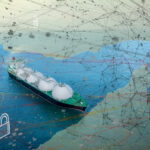
As one of the world’s lowest-cost and most reliable gas exporters, Qatar is significantly expanding capacity, reinforcing its position as a cornerstone supplier to both Asia and Europe.
Its long-term contracts provide stability in an increasingly volatile LNG market, making it one of the most strategically important energy players globally.
Iraq represents scale, but also fragility.
It holds some of the largest reserves in the region and continues to produce meaningful volumes, yet its infrastructure, political complexity, and reliance on export routes through the Gulf create ongoing vulnerability. In a constrained market, Iraq’s ability to maintain stable output becomes increasingly important.
Kuwait plays a quieter but critical role. As a consistent, low-cost producer, Kuwait contributes a steady supply while also investing in capacity expansion and downstream integration.
It lacks the headline influence of larger neighbors, but its reliability adds depth to the region’s overall supply base.
Oman operates differently. Positioned outside OPEC, Oman has carved out a more flexible role, participating in global markets while also developing its LNG capacity and balancing regional dynamics.
Its strategic location near key shipping routes adds to its importance, particularly as trade flows shift.
Together, these producers reinforce the region’s dominance, but also its complexity. Because the same concentration of supply also amplifies risk.
The Strait of Hormuz remains the single most critical chokepoint in global energy. A significant portion of the world’s crude and LNG flows through this corridor, linking producers across Saudi Arabia, Iraq, Kuwait, Qatar, and the UAE to global markets. Even the perception of disruption can ripple across oil, gas, and refined product markets simultaneously.
This is shifting how the market views the region. It is no longer just the world’s most important supplier, it is also the primary driver of volatility.
Producers are responding.
- Investment in upstream capacity continues
- LNG expansion, particularly in Qatar, is accelerating
- Export routes and logistics are under increased scrutiny
- Downstream and petrochemical integration is expanding
At the same time, reliability is becoming part of the value proposition.
In today’s market, the ability to deliver supply consistently, despite geopolitical tension, is just as important as production capacity itself.
For markets, the takeaway is clear. The Middle East is not losing relevance. It is becoming more strategic, and more sensitive.
Its role is evolving from dominant supplier to core stabilizer within a fragmented global system, where disruption in one corridor can reshape flows worldwide.
And in that environment, even small disruptions can carry outsized consequences.