Additions split between natural gas, wind, solar
The EIA reported yesterday that the U.S. net electric generating capacity in 2016 increased by the largest amount since 2011. 27 gigawatts of generating capacity was added in 2016, the largest amount of added capacity since 2012. This addition offset the retirement of 12 GW of capacity, resulting in a net gain of 15 GW, the largest net gain since 2011.
According to the EIA, these additions were split almost evenly between natural gas, solar and wind generation. Natural gas added 9 GW of capacity, while wind added 8.7 GW and solar added 7.7 GW. The first nuclear plant to come online since 1996, the Watts Bar Unit 2, also started generation in 2016. The vast majority of capacity additions in the past 15 years, about 228 GW, have come from natural gas.
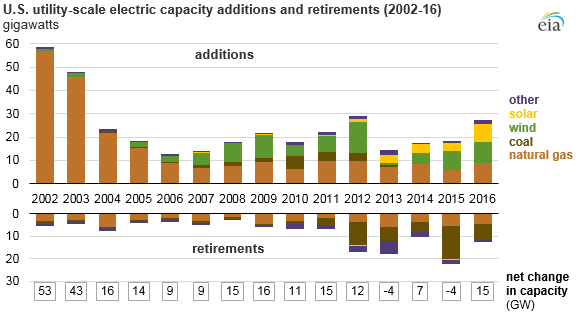
Most of the capacity retirements in 2016, like in previous years, came from coal and natural gas. According to the EIA, about 53 GW of both coal and natural gas generating capacity has been retired since 2002. The plants that are brought offline are primarily older, smaller, relatively inefficient plants.
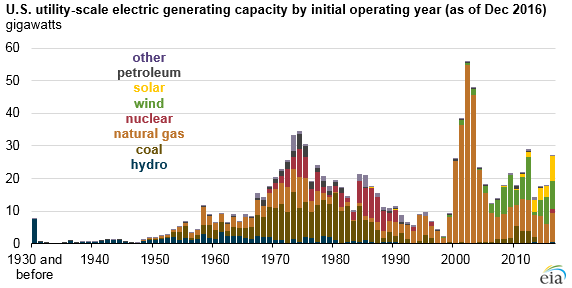
The U.S. generating fleet shows significant variation in age, according to the EIA. Most operating coal plants were built before 1980, and much of the U.S. hydroelectric capacity is even older. Natural gas and renewables, on the other hand, are much newer. The vast majority of capacity from these sources was built in the last 15 years.