(Oil Price) – Oil prices remain elevated in the wake of the Iran War. Tehran’s ability to close the Strait of Hormuz has sharply crimped world oil supply, with around 20% of all petroleum consumed globally passing through the waterway.
This triggered an oil shock with prices surging to levels not seen since Russia’s invasion of Ukraine. Although this is straining economies worldwide, it is creating a windfall for the tiny South American nation of Guyana, which recently emerged as a global oil producer and exporter.
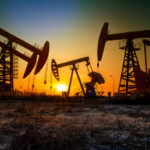
Since 2015, global supermajor ExxonMobil has made over 35 oil discoveries in the prolific 6.6-million-acre offshore Stabroek Block. In a stunning development, Guyana, in a mere 11 years, went from first discovery to pumping an average of 903,000 barrels of oil per day during April 2026. While this is slightly less than the 910,000 barrels per day lifted for March 2026, it is near record levels for the former British colony, which is South America’s third-largest oil producer behind Venezuela and ahead of Argentina.
Georgetown is reaping a humongous economic dividend from the rapid development of Guyana’s offshore petroleum industry. The once deeply impoverished country of less than one million is now the 11th richest country globally based on gross domestic product (GDP) per capita. This puts Guyana in an elite club globally, while also sparking fears that the country, like neighboring Venezuela, will fall to the oil curse. Essentially, this is where petroleum becomes the primary economic and fiscal driver, making a country highly dependent on oil rents.
Historically, this led to widespread corruption, economic volatility, heightened socio-economic inequality, civil conflict, and the rise of authoritarian regimes.
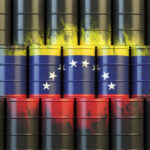
Guyana’s neighbor, Venezuela, is a prime example of how the oil curse can impact a country. After the autocratic socialist regime led by Hugo Chavez took control in 1999, the country’s economy began collapsing, which accelerated as oil prices plummeted, with democratic institutions and the rule of law crumbling as corruption surged. By 2016, Venezuela, once South America’s wealthiest country by GDP per capita, was on the brink of becoming a failed state. Indeed, by 2020, autocratic President Nicolas Maduro had lost control of much of the country as government finances collapsed.
There are fears Guyana could be headed for a similar fate. The tiny South American nation has long struggled with corruption, deep poverty, and weak democratic institutions, creating fertile ground for the oil curse, particularly as oil revenues soar higher. To mitigate this risk, President Dr. Mohamed Irfaan Al, who assumed office in 2020, instituted various strategies to combat corruption and strengthen governance. He also implemented a major infrastructure development program and significant investment to diversify the economy.
To safeguard the substantial capital generated by Guyana’s offshore oil wealth, the Natural Resource Fund was established in January 2019. President Ali strengthened the fund’s governance with the Natural Resource Fund Act 2021, which passed parliament in late December 2021. This sovereign wealth fund, designed to preserve Guyana’s oil wealth, held $4.1 billion at the end of April 2026 and is expected to exceed $13 billion by 2030. Those measures will mitigate the threat posed by the oil curse while protecting government income generated by petroleum exploitation.
They will also minimize the impact of highly volatile international petroleum prices on Guyana’s economy and preserve considerable capital for future generations to invest in the country. Indeed, recent oil price shocks caused the international Brent benchmark to soar to over $127 per barrel, delivering a massive financial windfall for Guyana’s government in the capital, Georgetown. This trend will continue with oil prices remaining elevated amid ongoing conflict in the Middle East and uncertainty over whether the Strait of Hormuz will reopen.
Not only will higher oil prices substantially boost fiscal income it will drive greater foreign investment in the Guyana Suriname Basin. Exxon and its partners in the prolific Stabroek Block, Chevron and CNOOC, are drilling additional exploration wells. The latest, which was scheduled to be completed during March 2026, was the Goatfish-1 wildcat well in the southeast portion of the Stabroek Block. The well’s progress has yet to be updated, but it is part of Exxon’s efforts to expand petroleum resources in the deepwater block, where 11 billion barrels were discovered.
The Stabroek Block is the main driver of Guyana’s growing petroleum production, which is forecast to reach as high as 2.2 million barrels per day by 2030. That is more than double the roughly 900,000 barrels per day currently being lifted in the country. This makes the nation an important supplier of oil in South America and globally, especially when it is considered that Guyana is not exposed to the geopolitical uncertainty associated with the Middle East. This will deliver an additional massive financial windfall for Guyana, making the country of less than one million the world’s largest per capita oil producer.
By Matthew Smith for Oilprice.com