(Investing) – Oil prices advanced 4% on Monday following a steep weekly loss, after Iran ruled out direct talks with the U.S. and said a full reopening of the Strait of Hormuz would only be possible after Washington met certain conditions.
Meanwhile, Iran-backed Houthi attacks on Saudi Arabian energy infrastructure exacerbated concerns over regional oil flows.
At 12:32 ET (16:32 GMT), Brent crude futures expiring in October, the global oil benchmark, climbed 4% to $86.85 a barrel, while U.S. West Texas Intermediate crude futures expiring in September rose 3.9% to $81.30 a barrel.
Crude benchmarks slumped last week, largely due to assertions from U.S. officials including President Donald Trump that talks with Iran were ongoing. But the losses were tempered towards the end of the week amid Tehran’s continuous rejection of Washington’s negotiation claims and reports that the Strait of Hormuz’s management framework would prohibit passage of U.S, Israeli, and other hostile vessels through the vital waterway.
Iran’s state media said a parliamentary commission had approved the framework with the inclusion of the ban on the vessels. Foreign ministry spokesperson Esmaeil Baqaei on Monday said that Iran and Oman had yet to finalize a joint statement on the management of the strait, adding that the plan would include mechanisms to monitor vessel passage, for which compensation should be received.
Iran also ruled out direct talks with the U.S. for now, citing alleged violations of the interim peace agreement reached in June. Tehran reiterated conditions for a full reopening of Hormuz, including an end to the U.S. naval blockade, the removal of sanctions, and compensation for war damage.
Trump on Monday said Iran was asking for compensation for damages since the start of the U.S.-Israeli joint assault on Tehran towards the end of February.
“I am likewise demanding compensation from Iran, for all of the people that they have killed and gravely wounded with their roadside bombs and many conflicts…Additionally, compensation should be paid to the families of the hundreds of thousands of innocent protestors that Iran has killed over the last 50 years, not to mention the 52,000 that have been killed in the last five months,” the president said on his Truth Social service.
“I have instructed my representatives to put this firmly into any, and all, future negotiations,” he added.
U.S. Vice President JD Vance over the weekend told Fox News that Washington was “talking to the Iranians, of course.”
Axios on Sunday reported that Trump was prepared to allow economic pressure to build on Iran as opposed to ordering a new military offensive. “We are only semi-negotiating with them. We are just watching Iran with its huge inflation and the fact they have no money,” Axios quoted the U.S. president.
“The situation in Iran remains finely balanced with Iran’s latest political and security moves suggesting that Tehran is trying to balance a tougher domestic posture with a continued search for a diplomatic off-ramp,” Deutsche Bank’s Jim Reid said.
“The appointment of former Revolutionary Guard commander Mohsen Rezaee to head the Supreme National Security Council reinforces hard-line influence at the centre of decision-making, even as Iranian officials insist they are close to an agreement with Oman on a new shipping framework through the Strait of Hormuz,” he said.
“Foreign Minister Abbas Araghchi has described the talks as being in their final stages, but Tehran has stressed that any technical agreement on shipping routes would not by itself lead to a full reopening of the waterway,” Reid added.
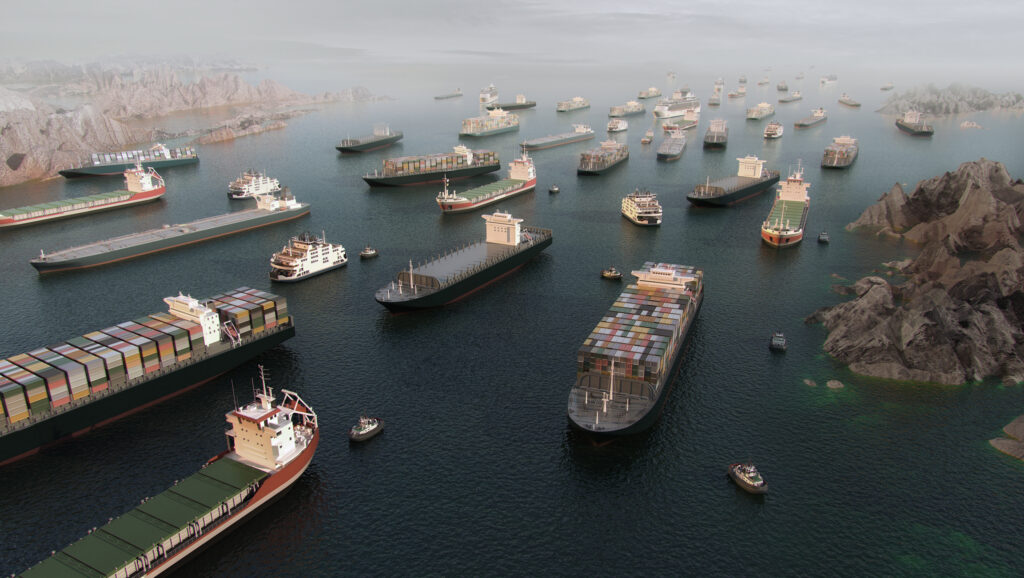
Amid the uncertainty over the management of the Strait of Hormuz, traffic through the chokepoint continued to decline. According to Kpler, confirmed vessel crossings fell from 15 on Friday to 11 on Saturday and just six on Sunday.
The shipping tracker also said traffic through the Bab el-Mandeb Strait remained significantly more active over the same period, with 43 confirmed crossings on Friday, 37 on Saturday, and 36 on Sunday. Still, threats to the shipping corridor remained elevated from Iran-backed Houthis in Yemen, who claimed a “broad and qualitative military operation” against Saudi Arabian depots in the Al-Makha area.
The Houthis earlier claimed to have targeted a Saudi Aramco refinery in Jizan. Saudi Arabia separately said a fire at the refinery had been extinguished after the attack.
Some supply risks eased after Ukraine agreed not to target certain non-Russian oil tankers and Black Sea energy infrastructure critical to Kazakhstan’s crude exports.
The Caspian Pipeline Consortium terminal has faced repeated attacks in recent weeks, putting at risk roughly 1.8 million barrels per day of Kazakhstan’s exports.
Roushni Nair and Scott Kanowsky contributed to this article