India is prioritizing new energy supply
India’s economy has been booming, but the country has struggled to meet growing energy demand. India suffers from chronic energy shortages, with nearly half of all homes receiving no power as many as 12 hours a day, according to The Guardian.
Over the past week, several reports have come out that India is looking for new ways to meet its growing thirst for energy. Last week, an Indian delegation visited Iran in anticipation of international sanctions being softened against the country, while Prime Minister Narendra Modi visited Canada seeking to further trade ties.
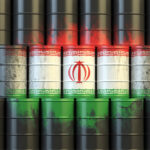
Target: Additional Iranian supplies
The Indian delegation that visited Iran included India’s finance and oil ministers, as well as executives from ONGC Videsh, Mangalore Refinery and
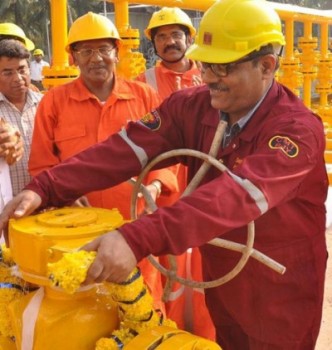
Petrochemicals Ltd, according to Reuters. India has remained Iran’s largest oil client after China despite restrictions placed on the country as part of an international sanctions regime. New Delhi’s oil imports from Tehran have eased to about 220 MBOPD in 2014 and 2015 from 370 MBOPD in 2010 and 2011 (roughly 40% less) due to international pressure.
India’s delegates are reportedly seeking more oil imports at better terms, along with development rights at the Farzad-B gas field in Farsi block, a source told Reuters. The Farzad-B gas field is estimated to hold initial in-place reserves of 12.5 Tcf and have a lifetime of 30 years.
Iran’s oil infrastructure will need massive investment in order to increase production. An Iranian diplomat said the oil and gas sector needs $220 billion for new projects and rehabilitation of existing assets. Development of Farzad-B would likely carry a price tag of about $7 billion, according to the diplomat.
Modi in Canada
Prime Minister Modi’s transatlantic trip marked the end of a 42-year hiatus since the head of India visited Canada. The purpose of the trip was to increase bilateral trade between the two countries, which Prime Minister Stephen Harper calls “natural partners.” In 2014, Canadian exports to India did not account for even 1% of Canada’s total exports, according to CBC. Bilateral trade has grown 47% since 2010, reaching $6 billion.
Energy imports are a major concern of Modi’s visit. The Indian prime minister is especially interested in increasing uranium imports from Canada, but natural gas and oil are important concerns as well. If a 40 year old uranium export ban is lifted, Saskatchewan-based Cameco Corp. (ticker: CCJ) could resume uranium shipments to help fuel India’s reactors. Australia lifted its uranium-to-India ban last fall.
Stuart Bergman, Deputy Chief Economist and Director, Economic & Political Intelligence Centre for Export Development Canada, says nuclear is a good solution for India’s needs. “India needs to triple its electricity supply over the next couple of decades and nuclear is a clean solution.” Liquid natural gas (LNG) offers another interesting opportunity for both sides, says Bergman.
Christy Clark, the premier of British Columbia, said B.C. LNG has already attracted $6 billion of investment from India, the largest investment from India in Canada ever. “This project will see LNG shipped by 2018 and produce 19 million tons per annum for 25 years,” explains Bergman. “We could very well see India become a major importer of Canadian LNG. Canada is well-positioned to take advantage of business opportunities in India. For now this is mostly a B.C. story. But Alberta could also get in on the game. It partly depends on political dynamics and the LNG liquefaction capacity and loading capacities at ports.”
Major investments in offshore drilling
India’s Oil & Natural Gas Corporation (ONGC), Oil India Ltd (ticker: OIL) and refiner Bharat Petroleum Corp. (ticker: BPCL) plan to develop offshore assets in Mozambique to help meet growing demand. Together the group holds a 30% interest in the Rovuma Area-1 field. They have already invested $6 billion into the field, and expect to pump an additional $6 billion into the project by 2019, the country’s oil minister said to the press last week.
The field is estimated to hold recoverable gas reserves of 75 Tcf. An approximate $18.4 billion will be required to start production at the first set of discoveries in Rovuma Area-1.
ONGC is also expected to offer two tenders in the near future that are expected to be worth more than $750 million combined. The first is set to revamp unmanned wellhead platforms (RUMP) and could be launched before the end of the month, reports Upstream News. Industry sources valued the new RUMP project at $400 to $500 million.
The second tender covers a complete overhaul of the Water Injection South (WIS) offshore process platform and is likely to follow within a month or two, sources said. “There has been some uncertainty around WIS and other west coast projects due to low crude prices, but we are hearing now that the WIS tender has been given a green light and could be launched soon,” according to a source. The WIS tender could be valued at $350 to $450 million.
Important disclosures: The information provided herein is believed to be reliable; however, EnerCom, Inc. makes no representation or warranty as to its completeness or accuracy. EnerCom’s conclusions are based upon information gathered from sources deemed to be reliable. This note is not intended as an offer or solicitation for the purchase or sale of any security or financial instrument of any company mentioned in this note. This note was prepared for general circulation and does not provide investment recommendations specific to individual investors. All readers of the note must make their own investment decisions based upon their specific investment objectives and financial situation utilizing their own financial advisors as they deem necessary. Investors should consider a company’s entire financial and operational structure in making any investment decisions. Past performance of any company discussed in this note should not be taken as an indication or guarantee of future results. EnerCom is a multi-disciplined management consulting services firm that regularly intends to seek business, or currently may be undertaking business, with companies covered on Oil & Gas 360®, and thereby seeks to receive compensation from these companies for its services. In addition, EnerCom, or its principals or employees, may have an economic interest in any of these companies. As a result, readers of EnerCom’s Oil & Gas 360® should be aware that the firm may have a conflict of interest that could affect the objectivity of this note. The company or companies covered in this note did not review the note prior to publication. EnerCom, or its principals or employees, may have an economic interest in any of the companies covered in this report or on Oil & Gas 360®. As a result, readers of EnerCom’s reports or Oil & Gas 360® should be aware that the firm may have a conflict of interest that could affect the objectivity of this report.