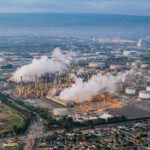
(Oil & Gas 360) By Greg Barnett, MBA – Part I of The New Geography of Refining examined how the U.S. Gulf Coast became the world’s most important refining hub. The region’s complex refineries, advantaged feedstocks, and extensive shipping infrastructure form the backbone of global gasoline, diesel, and jet fuel balances.

As transportation demand rises and geopolitical disruptions intensify, the United States is increasingly relied upon to stabilize international fuel markets. Part II turns to the future. The Gulf Coast is no longer just maintaining global refining stability; it is preparing to expand it. A proposed new refinery in Texas, backed by one of the world’s most sophisticated energy companies, and a wave of potential expansions across neighboring states could reshape refining capacity, trade routes, and competitive dynamics for decades.
A New Refinery for America: The Reliance–AFR Project in Texas
For the first time in nearly 50 years, the United States is on the cusp of building a major new refinery. The project, planned for Brownsville, Texas, is backed by Reliance Industries, operator of the world’s largest refinery complex, and developed by America First Refining (AFR). It represents a generational shift in U.S. refining investment.
A Historic-Scale Investment
The proposed refinery carries expectations of unprecedented scale. Early project details point to one of the most substantial energy infrastructure investments ever contemplated on U.S. soil. Its size reflects both the need for modern refining capacity and the confidence global investors place in the Gulf Coast’s long-term role in energy markets.
A 20-year offtake agreement to process Permian Basin shale oil further reinforces the project’s seriousness. Long-term crude commitments are rare in today’s refining world and signal deep confidence in U.S. light oil supply.
Why Brownsville?
Brownsville’s location at the southern tip of Texas offers several advantages: direct access to Permian light oil through pipelines and marine terminals, deep-water port capacity for exports, and ample space for a world-scale complex with room for integration and expansion. The area has long been an underutilized energy corridor poised for major development.
Designed for the Crude of the Future
Unlike legacy refineries built around heavy crude, the Texas project is designed specifically for ultra-light shale oil. This matters because the U.S. continues to produce more light, sweet crude than its refineries are optimized to process. A refinery engineered for today’s feedstock—rather than the heavy barrels of the past, could unlock new efficiencies, higher yields and improved energy security.
A Strategic U.S.–India Energy Partnership
Reliance’s involvement reflects a deepening cooperation between the United States and India. As India’s largest private energy company, Reliance brings unmatched technical expertise in refining and petrochemical integration. A Texas-based partnership would symbolize global capital flowing into U.S. refining and reinforce the Gulf Coast’s central place in the future of global energy.
How a New Texas Refinery Resets the Competitive Landscape
A modern, high-capacity refinery in Texas would immediately influence competition across the Gulf Coast. Refiners in Louisiana, Mississippi and Alabama, each with their own advantages, are unlikely to stay on the sidelines.
Louisiana: Ready to Modernize
Louisiana hosts one of the world’s densest refining and petrochemical corridors. The state has the permitting environment, workforce and deep-water infrastructure to respond quickly to new competitive pressure. Likely developments include hydrocracker and coker expansions, distillate-focused upgrades and new terminal capacity.
Mississippi: A Logistics-Focused Contender
Mississippi offers efficient ports, lower industrial costs and space for expansion. Modular upgrades, specialty refining units and marine export operations are among the opportunities the state could capture.
Alabama: An Emerging Industrial Player
Alabama’s refining footprint is modest, but its broader industrial ecosystem is expanding. The state could become home to aviation-fuel units, blending operations and infrastructure tied to increased flows from Texas and Louisiana.
Why Expansion—Not Just New Construction—Will Define the Next Decade
Even with the Texas project advancing, the more immediate trend is incremental expansion across existing Gulf Coast refineries. Debottlenecking, new hydrotreaters, modern hydrocrackers, coker upgrades, additional tankage and expanded marine capacity are all expected to add meaningful capacity without the hurdles of new construction.
Capital Watches Margins, and Margins Watch the World
For energy finance professionals, refining profitability still hinges on margins. Gasoline cracks track seasonal driving demand, diesel cracks follow global freight and industrial cycles, and jet cracks are tied to aviation. As global disruptions persist, margins will increasingly reflect scarcity rather than surplus, attracting investment toward modern, export-oriented refining assets.
Conclusion
The U.S. refining system is entering a new growth cycle. A next-generation refinery in Texas, supported by global expertise and long-term crude agreements, signals renewed confidence in U.S. refining economics. Neighboring Gulf states are preparing to modernize and expand. Investors are watching margins, feedstock advantages and export dynamics as the next phase of refining capacity takes shape.
The United States will remain the world’s transportation fuel anchor. With new capital arriving and regional competition intensifying, the Gulf Coast’s influence is positioned to grow even stronger.
By oilandgas360.com contributor Greg Barnett, MBA.
The views expressed in this article are solely those of the author and do not necessarily reflect the opinions of Oil & Gas 360. Please consult with a professional before making any decisions based on the information provided here. Please conduct your own research before making any investment decisions.