(Investing) – Oil prices rose sharply Monday on concerns of increasing supply disruptions after the U.S. and Israel launched a wave of attacks against Iran.

At 11:23 ET (16:23 GMT), Brent oil futures surged 6.8% to $77.80 a barrel, after earlier climbing to its highest level since January 2025, while West Texas Intermediate crude futures rose 5.7% to $70.85 a barrel, just below its highest level since June.
Crude soars after U.S., Israel attack Iran
The U.S. and Israel launched a wave of strikes against Iran over the weekend, killing hundreds, including Supreme Leader Ayatollah Khamenei and several top officials in the country.
Iran retaliated by launching missile strikes at Israel and several other Middle Eastern countries with U.S. ties, including Bahrain, Kuwait, Qatar, and the United Arab Emirates.
President Donald Trump said on Sunday evening that military action against Iran was set to continue in the coming days, while also warning that more American military personnel will likely be killed.
The weekend strikes mark the second major U.S. operation against Iran since mid-2025, with Tehran’s nuclear enrichment activities being a key point of contention for Washington. The development also comes just days after negotiations between Tehran and Washington ended with no clear agreement.
The U.S. had in June 2025 struck Iran’s key nuclear facilities, with the goal of hampering the country’s nuclear ambitions.
Duration of conflict is key
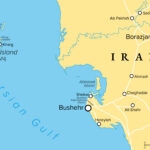
Iran was also seen attacking several ships passing through the Strait of Hormuz, likely heralding near-term disruptions in oil markets.
The Strait of Hormuz is a key shipping channel for the oil industry, with roughly 20% of the world’s oil consumption passing through the waterway.
“We believe it is reasonable to expect a virtual cessation of flows through the Strait of Hormuz for the duration of large-scale conflict between the U.S./Israel and Iran. As such, we believe the duration of conflict remains the most important consideration for energy markets,” Vikas Dwivedi, global energy strategist at Macquarie, said.
“President Trump’s own commentary has suggested outcomes ranging from a relatively short operation to an exceedingly long war. All else equal, the apparent U.S. discomfort with ground troops in Iran and messaging from the Trump administration biases towards a shorter duration of conflict,” he said.
“In contrast, achieving ’regime change’ would represent a more open-ended engagement and the risk of Iranian escalation towards energy targets and flows,” Dwivedi added.
Deutsche Bank highlights history of Brent spikes
According to data from Deutsche Bank, Monday’s spike in Brent is still far from some of the biggest in history.
“Even though it’s a big move, to get into the top 20, 10 and 5 it would need to be up +9.6%, +13.6% and +13.9% respectively. There were huge moves around the GFC and Covid-19 turmoil, whilst the Gulf War in 1990-91 also saw several double-digit gains,” Deutsche Bank’s Jim Reid said.
“Going forward, much will depend on the Strait of Hormuz. It seems it’s not officially closed but passage through it would be hazardous at the moment with self-imposed restrictions from virtually all that normally travel through it,” Reid added.
Barclays believes oil prices can remain elevated if supply disruptions persist.
An “oil spike and subsequent fade is the playbook,” analysts at Barclays said, but we’re “not ruling out a sustained move toward $90–$100 Brent if disruption persists.”
OPEC+ hikes oil production
Separately, the Organization of Petroleum Exporting Countries and allies, a group known as OPEC+, agreed to hike production by 206,000 barrels per day at a Sunday meeting.
The production increase could offset some supply disruptions from the U.S.-Iran conflict, although it remained to be seen whether the group’s members will follow through with the hikes.
Shipping disruptions due to the U.S.-Iran conflict could also limit the overall effect of the supply increase.
Sunday’s hike is the OPEC’s first such move since late-2025, as the cartel seeks to raise production and regain a greater share of oil markets.
The OPEC had raised production by about 2.5 million barrels per day through 2025, and had announced a brief pause in its output hikes in November.
But crude prices trimmed their initial gains, as a weekend production hike from the Organization of Petroleum Exporting Countries stood to potentially limit overall supply shortages.
Ambar Warrick and Peter Nurse contributed to this article