
(Oil Price) – As several countries invest in expanding their liquid natural gas (LNG) production and export capacity, and significant quantities of the gas are expected to come online in 2026 after a record 2025, supply could soon outpace demand. This begs the question: just how much LNG is needed to “fill the gap” as the world develops its renewable energy capacity?
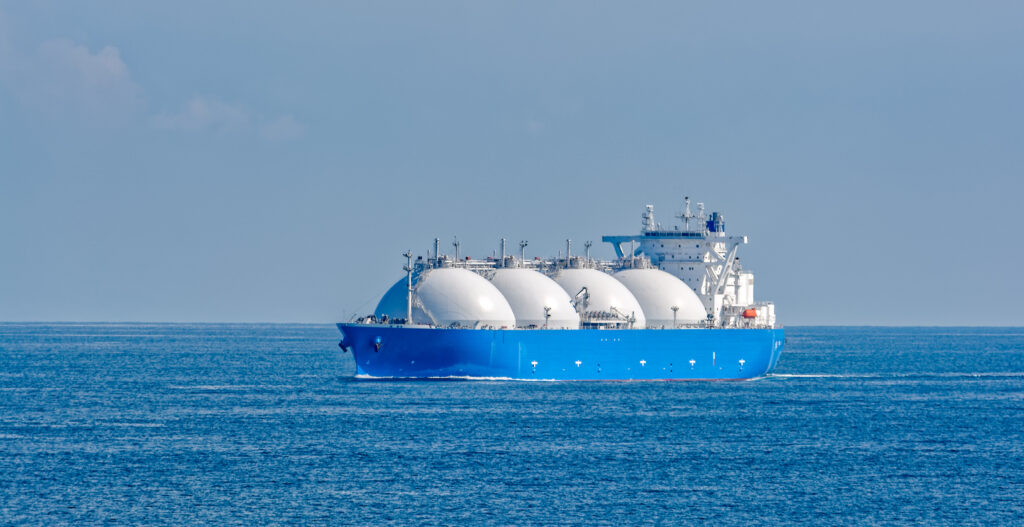
Last year was a record year for LNG trade, as exports exceeded the quantities predicted in several industry forecasts. The expansion of the world’s LNG trade has been led by the United States, which exported over 100 million metric tonnes of LNG in 2025. This was driven by several new plants coming online across the country. The U.S. exported an estimated 111 million metric tonnes (mmt) of LNG in 2025, 23 mmt more than the previous year and far higher than Qatar’s 20 mmt, the world’s second-largest exporter, according to the data analysis firm LSEG.
LNG shipments from the U.S. contributed roughly 25 percent of global LNG exports in 2025. The new Plaquemines facility, operated by Venture Global, the country’s second-largest export facility, shipped a reported 16.4 mmt of LNG last year, after commencing operations in December 2024. Several other U.S. facilities also increased their deliveries last year, following several years of investment.
In December, the U.S. set a record monthly LNG export figure of 11.5 mmt. The head of business intelligence at shipping firm Poten and Partners, Jason Feer, stated, “It is remarkable that in nine years the U.S. has gone from zero LNG exports to over 100 mmt, and the success validates the U.S. approach of selling free on board and pulling gas off the grid and the reliability of U.S. supplies.”
As the U.S. ramped up its LNG production and export capacity, there were fears of a glut. However, as the U.S. and Europe introduced sanctions on Russia following Moscow’s invasion of Ukraine in 2022, several European countries were forced to search for alternative gas suppliers, a role that the United States was well-prepared to take on. Europe purchased 9 mmt of LNG from the U.S. in December alone, as it further reduced its imports from Russia.
While Europe still requires LNG, there are fears of a growing overdependence of the region on the United States, which could provide up to 80 percent of its LNG imports by 2030. On the other hand, as Europe ramps up its renewable energy capacity, fears of an LNG glut in 2026 and beyond are resurfacing.
The U.S. Plaquemines facility is expected to reach its full production capacity this year. Meanwhile, Cheniere’s smaller modular plants will reach full capacity or may even be expanded. QatarEnergy and ExxonMobil’s Golden Pass LNG is also expected to start production this year. Together, U.S. LNG projects could increase the country’s annual LNG production by another 20 mmt, according to estimates.
Between 2025 and 2030, the new LNG export capacity is expected to increase by roughly 300 billion cubic metres per year, marking a 50 percent rise, according to the International Energy Agency (IEA). Around 45 percent of this growth is expected to come from the U.S. As the supply increases, profit margins are expected to decline, which will help consumers who are battling with rising energy bills, although it is not such great news for producers.
The head of energy research at MST Marquee, Saul Kavonic, explained, “U.S. LNG has made outstanding margins since late 2021, but those margins have come back to more normal levels now as the market has stabilised and new LNG capacity starts coming online.” These margins could fall below normal levels and, if they do, producers may be forced to reduce production to boost prices. However, falling LNG prices could potentially work in the favour of producers, as LNG becomes increasingly attractive over more expensive options, such as coal and oil.
Just when the LNG supply will outpace the global demand is still uncertain, but one thing that energy experts expect is that the world’s demand for LNG will continue growing until 2050. This predication backtracks on a previous IEA forecast that suggested that all fossil fuel demand would begin to decline much earlier than the mid-century. The new prediction reflects the failure of several countries to meet their renewable energy capacity goals, as well as the rising power demand being driven by tech sector plans for massive new data centres to power artificial intelligence.
In 2026, the continued growth in global LNG production and export capacity is expected to drive down prices, and we may potentially see the beginnings of an LNG glut. Meanwhile, global LNG demand will likely continue to rise until more renewable energy capacity comes online, particularly amid anticipated growth in global power demand driven by the tech sector.
By Felicity Bradstock for Oilprice.com