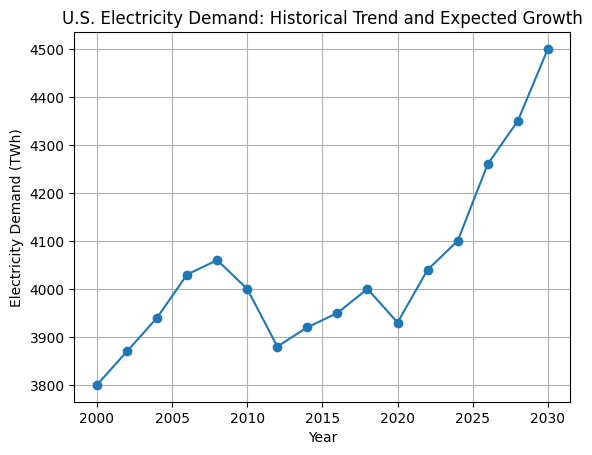
(By Oil & Gas 360) – For nearly two decades, electricity demand in the United States remained largely unchanged. Efficiency improvements, slower industrial growth, and shifts in the economy kept overall power consumption relatively flat. That period may now be ending.

Electricity Demand Outlook
A combination of artificial intelligence infrastructure, data center expansion, electrified transportation, and the reshoring of manufacturing is beginning to drive a new phase of electricity demand growth across the country. U.S. electricity consumption is expected to increase materially over the coming decade. Key projections suggest that U.S. electricity demand could rise 15 to 20% by 2030.
Data centers alone could account for 7 to 10% of total U.S. power consumption by the end of the decade and AI-driven computing demand may increase data center electricity usage 2 to 3x compared with current levels
Large hyperscale data centers are becoming major consumers of electricity. A single advanced AI data campus can require 100 to 500 megawatts of power, equivalent to the electricity demand of tens of thousands of homes.
Generation Requirements
To meet this growing demand, the U.S. power sector will need significant new generation capacity. Estimates suggest the country may require 80 to 120 gigawatts of new power generation capacity over the next decade, and a combination of natural gas generation, renewables, nuclear extensions, and energy storage
Natural gas is expected to remain a critical reliability resource due to its ability to provide dispatchable power during periods of peak demand and variable renewable generation.
Grid Investment
Transmission infrastructure is emerging as a key bottleneck in the energy transition and electrification cycle. Forecasts suggest that the U.S. could require $300 billion to $500 billion in transmission and grid investments by 2035 to accommodate rising electricity demand and new generation capacity.
Major spending areas include, High-voltage transmission expansion, grid resiliency upgrades, interconnection capacity for new generation sources, and distribution system modernization.
Total Capital Investment
Across generation, transmission, and supporting infrastructure, the U.S. energy system could require more than $1 trillion in capital investment over the next decade. This spending cycle is likely to benefit several sectors, such as, natural gas infrastructure, power engineering and construction firms, grid equipment manufacturers, energy storage developers, and data center energy suppliers.
Strategic Takeaway
The combination of AI computing demand, electrification, and industrial reshoring is creating a structural shift in U.S. electricity consumption. For investors, the emerging power demand cycle suggests a prolonged investment opportunity across both traditional energy infrastructure and the evolving digital-energy ecosystem.
About Oil & Gas 360
Oil & Gas 360 is an energy-focused news and market intelligence platform delivering analysis, industry developments, and capital markets coverage across the global oil and gas sector. The publication provides timely insight for executives, investors, and energy professionals.
Disclaimer
This opinion article is provided for informational purposes only and does not constitute investment, legal, or financial advice. The views expressed are based on publicly available information and market conditions at the time of publication and are subject to change without notice.