(BOE Report) – The ousting of Nicolas Maduro in Venezuela may mark the beginning of a broader U.S. attempt to realign Latin America geoeconomically, limiting the ability of Russia and China to use the Western Hemisphere as a pressure point in global commodity markets. Central America could become the next domino to fall.
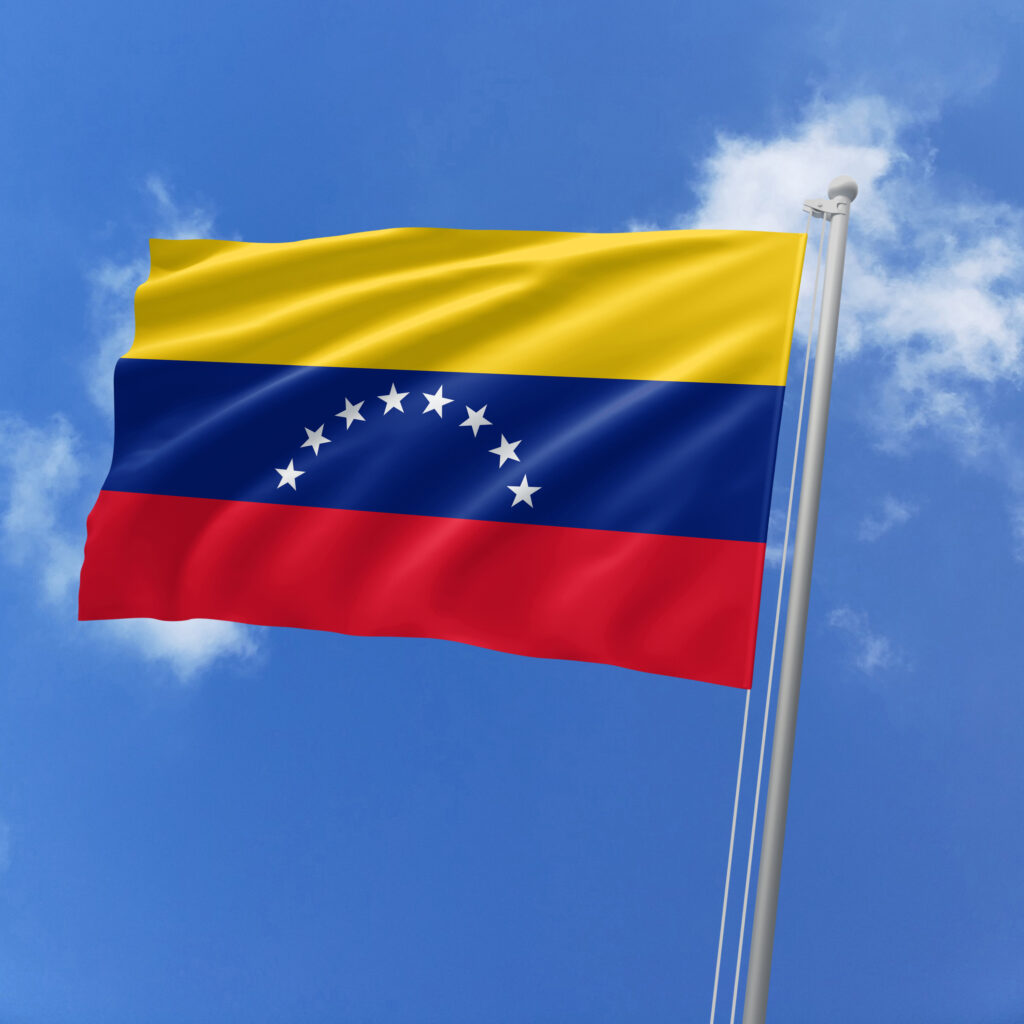
The region is an attractive route for facilitating both licit and illicit commerce, given its proximity to major shipping lanes and checkpoints. This includes the Panama Canal, which handles about 40% of U.S. container traffic and approximately 5% of world trade, as well as the Caribbean Sea transit routes and west coast ports in Mexico, Guatemala, and Costa Rica that are used for shipments to Asia. Russia already exploits this geography through a growing “shadow fleet,” aging vessels with opaque ownership structures that operate outside the Western insurance system. They help move crude oil and refined products subject to Western sanctions across the Caribbean corridor, through the Panama Canal and into the Gulf of Mexico, blunting U.S. and European efforts to curb Moscow’s war financing in Ukraine. The region is a critical node in the Kremlin’s global financial network, as some of the largest Russian companies use the offshore financial hubs in the Caribbean extensively to conduct global business. The Center for the Study of Democracy estimates that offshore shell companies there control close to $70 billion in Russian assets. Yet, China remains the structural economic power in Latin America. Its Belt and Road investments, technology transfer, and financing dwarf Russia’s and increasingly the U.S.’s outlays. China has expanded its engagement through tariff reductions and sectoral agreements in the region, positioning itself as a key provider of technology, industrial inputs, transportation equipment, and consumer goods.
Moscow and Beijing have used strategic investments, political ties and long-term contracts to establish their foothold in the Americas. Chinese development loans in Latin America rose to more than $120 billion by the end of 2023, according to Inter-American Dialogue.
True, U.S. foreign direct investment (FDI) stocks in Latin America, worth around $1.4 trillion at the end of 2023, still dwarf the roughly $610 billion in combined Russian and Chinese capital in the region.
Yet, the strategic bilateral agreements Latin American countries have signed with Moscow and Beijing have significantly limited opportunities for U.S. and European companies to enter the markets likely to define the trajectory of the Western Hemisphere’s future economic development. The Trump administration’s strategy for cementing its dominance in the region – the so-called “Donroe Doctrine” – is seeking to change that.
SHIFTING REGIONAL OIL DYNAMICS
Venezuela has long supported regimes stretching from Cuba to Nicaragua through its control of the world’s largest proven oil reserves – with additional support from Moscow.
For example, Venezuela and Russia cover more than 60% of Cuba’s oil consumption at a very low cost. This dependence has turned energy supply into a geopolitical lever. Cuba’s economy already faces chronic energy shortages, so if the U.S. blocks Venezuelan and Russian supplies, the country could be at risk of economic chaos.
For commodities markets more broadly, the immediate impact of increased U.S. involvement in the region would likely be indirect. Stricter scrutiny of Caribbean shipping, insurance and reflagging – or changing a vessel’s country of registration – is apt to raise costs for traders and restrict the flow of sanctioned crude.
In this scenario, there will likely be increased reliance on U.S. Gulf Coast refineries to replace the lost supply from Russia and Venezuela.
If the U.S. Southern Command also suppresses the shadow fleet along the Atlantic coast of South America, this would further push back Russia, which recently became the biggest supplier of petroleum products to Brazil. This may enable U.S. refiners to reclaim their traditional role as the swing supplier to the region.
On top of this, the reintegration of Venezuela into the global oil market under U.S. control would directly cut into the market shares of oil exporters such as Mexico, Ecuador and Colombia. They have all benefited from the crumbling Venezuelan oil industry, increasing their sales regionally over the past decade.
BROADER GEOECONOMIC REALIGNMENT
Beyond oil, the U.S. move to reclaim its economic sphere of influence in the Western Hemisphere may open the door for more American investment in strategic sectors such as nuclear energy, port and road infrastructure, as well as the development of the region’s vast critical raw materials and fertilizer supplies.
All of these sectors are currently dominated by Chinese and Russian companies in Bolivia, Brazil, Argentina, Venezuela, Peru and Chile, among others.
Yet the U.S. approach is not without risk. Coercive U.S. action could unsettle regional trade and investment, strain relations with key Latin American governments and, in some cases, accelerate the shift toward China rather than reversing it.
With the U.S. intervention in Venezuela, the Trump administration could begin to roll back the region’s growing geoeconomic alignment with Russia and China, but only if coercion is matched with credible economic incentives for countries to shift course, meaning this month’s events have implications far beyond the oil market.
(The views expressed here are those of Martin Vladimirov, Director of the Geoeconomics Program of the Center for the Study of Democracy (CSD))
Enjoying this column? Check out Reuters Open Interest (ROI), your essential new source for global financial commentary. ROI delivers thought-provoking, data-driven analysis of everything from swap rates to soybeans. Markets are moving faster than ever. ROI can help you keep up. Follow ROI on LinkedIn, and X.
(Editing by Marguerita Choy)