Oil & Gas 360 By Greg Barnett, MBA – Carlyle’s latest note argues the Strait of Hormuz disruption is an inflection point for energy security, with oil functioning as the “rare earth of the macro system.” The authors contend that while oil’s share of GDP has fallen, its functional irreplaceability in aviation, petrochemicals, grid balancing, and fertilizers makes today’s economy more vulnerable to a supply shock than in 1973.

They see a security premium driven as much by precautionary hoarding as by physical loss, and they argue that policy tools, including SPR releases, cannot cap prices while Hormuz remains impaired. Portfolio-wise, they highlight a rotation toward HALO (heavy‑asset, low‑obsolescence) exposures as the old economy hedges inflation and supply risk.
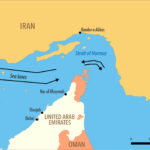
Public data broadly corroborate the chokepoint’s centrality: roughly 20% of global oil and ~20% of LNG trade normally transits Hormuz, and even short interruptions reverberate across supply chains. The EIA’s March 10 outlook attributes the latest Brent spike to an effective closure that has stranded vessels and forced regional production shut‑ins, while emphasizing a persistent risk premium even if flows resume. Insurance cancellations have amplified the stoppage, leading P&I clubs to withdraw or reprice war‑risk cover, pushing more ships to anchor and rerouting freight, an exogenous cost shock that policy cannot easily offset.
Second‑order effects cited by Carlyle are also visible. China has told refiners to suspend diesel and gasoline exports, tightening Asian product balances and reinforcing a defensiveness consistent with “hoard first, trade second.” QatarEnergy has declared force majeure on LNG, removing a key swing supply and magnifying gas‑to‑fertilizer cascades. In refined products, Singapore jet fuel briefly printed around $231/bbl, signaling acute scarcity in aviation, exactly the “irreplaceable” use case Carlyle highlights.
On hoarding dynamics, history is instructive: scholarship on 1979 shows precautionary demand can double the apparent shortfall’s price impact, a pattern consistent with today’s behavior as inventories are built preemptively. Meanwhile, the U.S. SPR’s maximum drawdown of about 4.4 mb/d underscores the limits of stock releases against a chokepoint that ordinarily carries ~20 mb/d; releases can ease, not replace, flow.
Investment takeaways: If the “New Joule Order” thesis holds, expect (i) structurally higher volatility premia across molecules that cross chokepoints; (ii) continued rotation toward asset‑heavy energy and infrastructure as portfolios rebuild an internal hedge; and (iii) elevated regional basis risk in products (jet/diesel) until trade routes, insurance, and contracts reset.
For executives, the near‑term playbook is resilience over optimization, secure molecules, diversify logistics, and reassess contract language (force majeure, insurance clauses). For investors, a neutral stance favors cash‑flowing upstream, midstream, and petrochemical feedstock leverage over pure beta until sea‑lane risk normalizes.
By oilandgas360.com contributor Greg Barnett, MBA.
The views expressed in this article are solely those of the author and do not necessarily reflect the opinions of Oil & Gas 360. Please consult with a professional before making any decisions based on the information provided here. Please conduct your own research before making any investment decisions.